
Product Labeling Guide for Small Businesses: Types, Examples, and Design Tips
Product labeling is one of the simplest ways for a small business to build a recognizable brand. A well-designed label helps customers quickly understand what the product is, who made it, and why they should trust it.
For many entrepreneurs selling handmade goods, food products, or online items, product labels and brand labels play a key role in making products look professional and retail-ready.
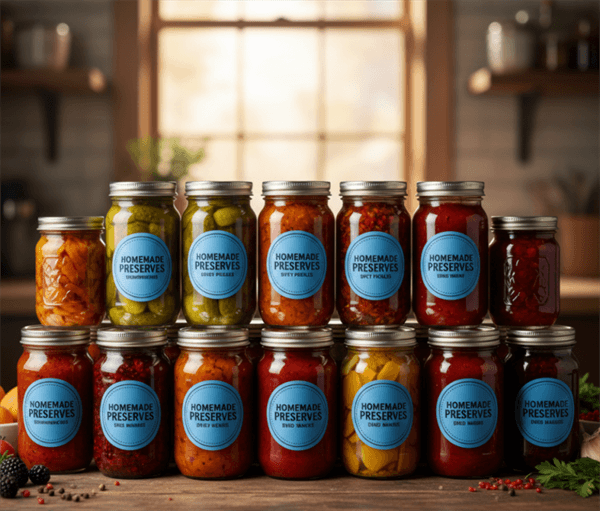
In this guide, you’ll learn what product labeling is, the main types of product labels, real examples from different industries, and how to design labels that help your brand stand out.
What Is Product Labeling?
Product labeling refers to the printed or adhesive information attached to a product. It identifies the brand and communicates essential details about the item.
A product label usually appears as a sticker, tag, or part of the packaging design. For small businesses such as Etsy sellers, handmade jewelry makers, and homemade food sellers, product labeling does two jobs at the same time:
- Branding – it helps customers remember your brand
- Information – it tells customers what they need to know before buying
Without a clear label, even a well-made product can look unfinished or generic.
What Information Should Be on a Product Label?
A well-designed product label usually includes several essential elements:
- Brand name or logo
- Product name
- Ingredients or materials
- Size, weight, or quantity
- Expiration or manufacturing date
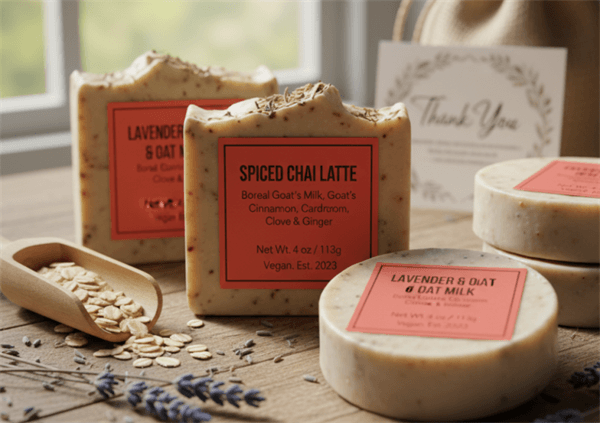
These details help customers quickly understand what they are buying. Some brand labels also include a QR code that directs customers to product pages, tutorials, or the brand’s online store.
Many brands also include additional information that improves usability, such as usage instructions, storage advice, or care guidance. For example, a coffee bag label may include roast level or tasting notes.
For regulated products, labels may also need to meet specific legal requirements. Food products often include ingredient lists and allergen warnings, while other categories may require additional disclosures.
If your product falls into a regulated category, check local labeling requirements before printing your labels.
Why Product Labeling Matters for Small Businesses
Many business owners focus on product quality but overlook labeling. That’s a missed opportunity. In fact, good product labeling for small businesses can dramatically improve how customers perceive your brand.
1. Labels Create the First Impression
Customers judge products within seconds.
A well-designed label signals professionalism. Clean typography, clear information, and a recognizable logo help the product feel more polished and appear more credible to customers.
- ● A jar of homemade jam with no label looks like a gift.
- ● The same jar with a polished label looks ready for retail shelves.
The product hasn’t changed—but the perception has.
2. Labels Build Brand Recognition
Think about famous brands like Coca-Cola or Nutella.
You don’t need a global brand to use the same principle.
- ● colors
- ● logo
- ● fonts
- ● label style
consistent across products, customers can recognize and remember your brand more easily.
Over time, your label becomes part of your brand identity.
3. Labels Provide Important Product Information
Customers want clarity before buying.
- ● What is this product made of?
- ● How big is it?
- ● How should I use it?
- ● When does it expire?
Providing this information clearly reduces customer hesitation and improves trust.
For food products, cosmetics, and handmade goods, clear labeling can also prevent confusion and complaints.
4. Labels Improve Customer Trust
Transparency builds confidence.
When customers see clear ingredient lists, usage instructions, or care guidelines, they feel more comfortable buying.
- ● A skincare label that clearly lists ingredients and usage instructions appears more credible.
Labels show that you care about your customers’ experience.
Types of Product Labels (With Practical Examples)
Not all labels serve the same purpose. Understanding the main types helps you design labels that work.
Here are the most common ones.
| Label Type | Purpose | Example |
|---|---|---|
| Brand Label | Displays brand name and logo | A round logo sticker on handmade soap packaging or a branded tag on clothing. |
| Product Information Label | Describes the product’s features or variations, such as flavor, scent, style, or product type. | A candle label showing scent type, burn time, and product name. |
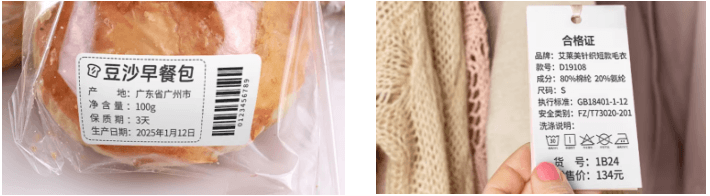
| Compliance Label | Includes legally required information to meet regulatory standards. | Food ingredient lists, allergen warnings, or clothing fabric composition labels. |
Most small businesses combine several of these in one label.
- ✅ brand name
- ✅ scent description
- ✅ ingredients
- ✅ weight
All in one design.
Product Label Examples in Different Industries
Different industries use labels in different ways. Understanding common patterns can help you design better labels for your products.
Clothing Labels
Clothing labels usually include several types of information:
- ● Brand labels show the brand name and size.
- ● Care labels include fabric composition and washing instructions.
For small clothing brands, adding a simple brand tag inside garments helps reinforce identity.
- ● Brand Name
- ● Size: S / M / L
- ● Style Number: 001
Food Labels
Home bakers, small bakeries, jam makers, and homemade snack brands need clear food labels that provide essential product information.
Common elements include:
- ● ingredients
- ● expiration date
- ● storage instructions
- ● allergen warnings
- ● Fresh Blueberry Muffins
- ● Ingredients: flour, eggs, butter, blueberries
- ● Best before: July 12
- ● Store in a cool, dry place
Handmade Product Labels
Handmade products such as jewelry, candles, soaps, crafts, and other small-batch items rely heavily on branding.
Typical label information includes:
- ● brand name
- ● product name
- ● materials
- ● handmade statement
- ● Luna Jewelry
- ● Handmade Sterling Silver Necklace
- ● Nickel-free · Hypoallergenic
How to Design a Product Label: Step-by-Step Guide
Designing a label doesn’t require a design degree. A simple process can get you from idea to finished label quickly.
Define Your Brand Elements
Before designing anything, decide on your basic brand style.
Choose:
- ●brand colors
- ●fonts
- ●logo placement
Keeping these consistent makes your products look cohesive.
Choose the Label Shape and Size
Different products work better with different label shapes.
Common options include:
- ●circular stickers
- ●rectangular labels
- ●long strip labels
- ●square labels
Small jewelry boxes may use round logo stickers, while food jars often use rectangular labels.
Add Essential Information
Next, add your product details.
Focus on clarity:
- ●product name
- ●key features
- ●ingredients or materials
Avoid clutter. Too much text makes labels hard to read.
Make It Easy to Read
Readability matters more than decoration.
Good label design usually includes:
- ●high-contrast colors
- ●large product name
- ●clean fonts
If customers can’t read the label quickly, the design fails.
Test Print Your Label
Before printing hundreds of labels, test a few.
Check:
- ●font size
- ●spacing
- ●color contrast
- ●placement on packaging
Small adjustments at this stage save time and money later.
Best Label Design Tips for Small Businesses
Simple design choices can make labels look far more professional. Here are a few practical product label design tips.
Keep the Design Simple
Minimalist labels often look more premium than overly complex designs.
Focus on:
- ●clear product name
- ●one or two colors
- ●plenty of white space
Use Consistent Branding
Consistency builds recognition.
If your brand color is sage green, keep that color across all labels. The same applies to fonts and logo placement.
Prioritize Legibility
Never sacrifice readability for decoration.
Choose fonts that are:
- ●clear
- ●simple
- ●large enough to read
Especially for ingredient lists or instructions.
Leave Space Around Key Elements
Crowded labels feel chaotic.
Allow breathing room around:
- ●logo
- ●product name
- ●text blocks
White space makes labels easier to read.
How to Print Product Labels at Home?
Many small businesses choose to print product labels at home because it is flexible, affordable, and easy to scale as the business grows.
There are several common ways to print product labels, each with different advantages depending on your needs.
| Printing Method | Best For | Advantages |
|---|---|---|
| Thermal label printer | Small businesses and product packaging | Fast printing, no ink needed, ideal for barcode and product labels |
| Inkjet printer with sticker paper | Colorful branding labels | High color quality and design flexibility |
| Pre-cut label sheets | Beginners or small batches | Simple setup and compatible with most printers |
Below is a closer look at how each option works and when it might be the best choice.
1. Thermal Label Printers
Popular for shipping labels and simple product labels. Thermal label printers are widely used by small online sellers, Etsy shops, and home-based brands.
Benefits:
- fast printing with on-demand label production
- low operating cost, no ink required
- simple setup and maintenance
Common label material:
thermal paper labels, including roll labels and die-cut labels
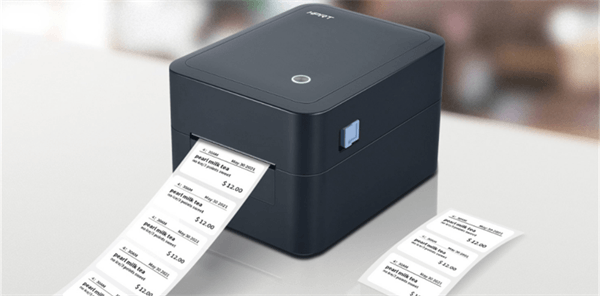
Best Product Label Printer for Small Business: HPRT SL32BT
Maximize your efficiency with the HPRT SL32BT 3-inch thermal label printer —the ideal solution for small businesses needing quick, reliable, and low-cost labeling.
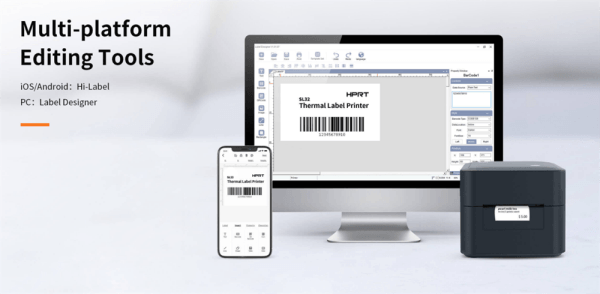
With integrated software and a mobile app, you can easily create professional labels for food packaging, crafts, and retail items from your phone or computer.
Key features
- Fast label printing – prints up to 180 mm/s, helping small businesses handle daily product labels and address labels efficiently.
- Flexible label sizes – supports 25–80 mm label widths, suitable for home bakery labels, food jar labels, barcode labels, and nutrition labels.
- Easy setup – one-click driver installation and simple operation make it easy for beginners to start printing quickly.
- Barcode and QR code support – useful for inventory management, shipping labels, and product branding.
- Bluetooth connectivity – enables convenient mobile label editing and printing.
The SL32BT helps small businesses streamline their labeling workflow, making it easier to print product and packaging labels quickly from a home studio or small workspace.
HPRT is an established printer supplier that offers a wide range of label makers and printers in different sizes and specifications. These solutions help small businesses handle product labeling, packaging, shipping, and inventory tracking with simple setup and reliable performance.
2. Sticker Paper with Inkjet Printers
Inkjet printers are another common option for small businesses that want colorful and visually rich labels.
By printing on adhesive sticker paper, businesses can easily create custom labels with images, illustrations, and full-color branding.
Advantages
- vibrant colors
- flexible label sizes and shapes
- easy design customization
Common label types
- Glossy sticker labels
- Matte sticker labels
- Decorative product labels
- Logo stickers
3. Pre-cut Label Sheets
Pre-cut label sheets are a convenient option for beginners who want a simple way to start labeling products.
These sheets come with pre-shaped adhesive labels arranged on standard printer paper. You can design the labels online using tools like Canva or label templates, then print them directly onto the sheet.
Common label types
- Round sticker labels
- Address labels
- Small product labels
Common Labeling Mistakes to Avoid
Even simple labeling mistakes can hurt your brand. Here are a few to watch for.
Too Much Text
Customers won’t read long paragraphs on a label. Keep text concise.
Fonts That Are Too Small
Tiny text frustrates customers. Always print test labels to confirm readability.
Inconsistent Branding
Using different colors and styles across products weakens brand identity. Stick to a visual system.
Poor Label Placement
A label placed crookedly or covering packaging elements looks unprofessional. Always test placement.
Start Building Your Brand with Better Labels
Product labeling might seem like a small detail, but it plays a huge role in how customers see your brand.
A thoughtful label can:
- Make your product look professional
- Communicate important information
- Help customers remember your brand
The good news is that creating great labels doesn’t require a big budget or a design team. With the right approach, even small businesses can design labels that look polished and memorable.
Start simple. Design one clear label. Test it on your packaging. Then refine your system as your brand grows. Over time, your labels will become more than just stickers—they’ll become part of your brand identity.