

QR code laser marking creates permanent, scannable QR codes directly on parts using techniques like etching, engraving, annealing, and foaming. It is widely used for DPM (Direct Part Marking), traceability, serialization, and asset identification in environments where labels or ink may fail.
Manufacturers typically evaluate this method when a QR code must stay readable on the actual part surface after abrasion, heat exposure, chemicals, cleaning, and long service cycles, especially in industrial and electronic product marking.
This guide covers the main technical and application factors that determine whether QR code laser marking is the right choice for your workflow:
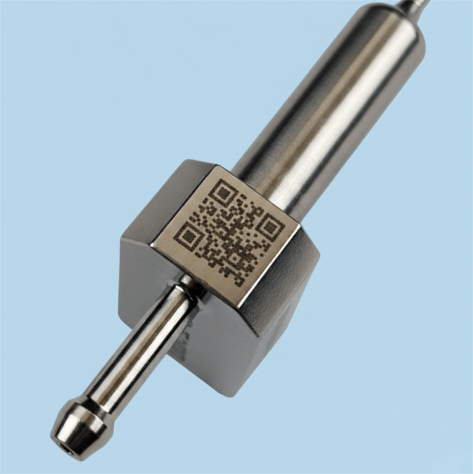
What Is QR Code Laser Marking?
QR code laser marking uses a focused laser beam to modify the surface of a material so that a QR code can be read by a camera, scanner, or mobile device.
A laser-marked QR code may encode:
- serial number
- production date and shift
- lot or batch ID
- machine ID
- operator ID
- URL or database pointer
- inspection or maintenance record reference
Unlike adhesive labels or inkjet marking, the code is created directly on the part. That makes it suitable for applications where permanence, traceability, and resistance to wear matter more than low upfront marking cost.
What Materials Can Be Used for QR Code Laser Marking?
QR code laser marking can be applied to a variety of materials. Here are the most common categories:
Metals
Stainless steel, carbon steel, anodized or bare aluminum, brass, copper
Non-metals
Plastics, acrylic, wood, leather, paper, and glass
Coated surfaces
Including painted, anodized, or coated metals
This versatility makes laser marking a top choice for industries like automotive, electronics, packaging, and medical devices, where durability and traceability are essential.
Common Laser Types for QR Code Laser Marking
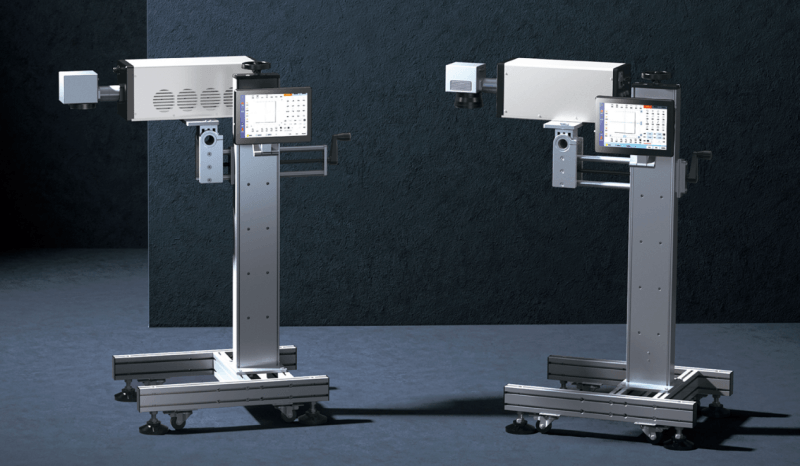
QR code laser marking typically uses fiber, CO₂, and UV lasers depending on the material type and marking requirements.
Below is a quick comparison:
| Laser Marker Type | Best For | Key Advantages |
|---|---|---|
| Fiber laser marker | Stainless steel, carbon steel, aluminum, brass, copper | High contrast on metals, durable marking, low maintenance |
| CO₂ laser marker | Wood, leather, paper, packaging materials, some plastics | Strong non-metal versatility, clean marking on organic materials |
| UV laser marker | Plastics, glass, ceramics, coated surfaces, fine components | Small spot size, low heat impact, sharp edges for precise codes |
Recommended Reading:A Guide to Fiber, CO2, and UV Laser Marking Machines
QR Code Laser Marking Techniques: Etching, Engraving & More
QR code laser marking can be produced through several surface-modification techniques, depending on the material, required contrast, and durability target.
In practice, the right technique depends on the substrate, readability target, and service environment.
On stainless steel, a fiber laser can produce a dark annealed mark with minimal surface disruption when oxidation is carefully controlled. On anodized aluminum, the laser may remove the top layer to reveal lighter contrast underneath.
On some plastics, a UV laser can produce cleaner edges and a smaller heat-affected zone than a CO2 or fiber source.
Benefits of QR Code Laser Marking
QR code laser marking offers clear advantages when identification must stay with the part itself. Key benefits include:
- ✓ Permanent part identification
- ✓ Better traceability
- ✓ Support for serialization
- ✓ Lower consumable dependency
- ✓ Stronger resistance to harsh environments
Compared with labels and inkjet coding, laser marking is often the better option when the code must remain readable after abrasion, heat exposure, chemical contact, cleaning, or repeated handling. It is also better suited to part-level identification on metal and engineering-grade components.
The table below highlights the main differences between laser marking, labels, and inkjet coding.
| Method | Permanence | Consumables | Harsh Env Performance | Typical Strength | Typical Limitation |
|---|---|---|---|---|---|
| Laser marking | High | None | Strong | DPM, traceability, long service life | Higher initial equipment cost |
| Labels | Low to medium | Yes | Weak to moderate | Fast deployment, flexible design | Can peel, wrinkle, or detach |
| Inkjet coding | Medium | Yes | Moderate | Good for packaging lines | Susceptible to abrasion and solvent exposure |
How to Choose the Right QR Code Laser Marker
When selecting a QR code laser marking machine, it helps to ask a few practical questions:
- • What material and surface finish does the product have?
- • Does the code need to survive abrasion, heat, chemicals, sterilization, or repeated cleaning?
- • Is the priority high contrast, minimal surface disruption, or deeper marking for long-term durability?
- • How small will the QR code be, and how easy does it need to be to scan?
- • Will the code be marked on bare material, a coated surface, or a plastic with formulation-dependent laser response?
- • Does the application require part-level traceability, decorative marking, or both?
| Material | Typical Laser Marker Type | Typical Marking Mechanism | Practical Consideration | Typical Applications |
|---|---|---|---|---|
| Stainless steel | Fiber laser marker | Annealing, engraving, etching | Good for durable DPM; contrast control is critical | Medical instruments, industrial parts, tools, nameplates |
| Carbon steel | Fiber laser marker | Engraving, etching | Useful for industrial parts exposed to wear | Machinery parts, brackets, fixtures, automotive components |
| Anodized aluminum | Fiber laser marker, sometimes UV | Coating removal | Often produces strong visual contrast | Electronics housings, control panels, consumer product parts |
| Bare aluminum | Fiber laser marker, UV laser marker | Surface modification, engraving | Reflectivity and contrast must be managed carefully | Aerospace parts, equipment labels, lightweight enclosures |
| Brass/Copper | Fiber laser marker | Engraving, etching | Reflective materials require stable process control | Electrical components, decorative plates, branded parts |
| Plastics | UV, CO2, sometimes Fiber | Foaming, carbonizing, color change, ablation | Material formulation strongly affects readability | Device housings, cable tags, packaging, consumer products |
| Acrylic | CO2 laser marker, UV laser marker | Surface engraving, frosting | Good for signage and non-heavy-duty applications | Display panels, signage, branded plaques, decorative items |
| Wood | CO2 laser marker | Carbonization, engraving | Suitable for decorative or light commercial uses | Packaging, gift products, branded accessories |
| Leather | CO2 laser marker | Surface darkening, engraving | More common in branding than industrial traceability | Wallets, tags, branded accessories, promotional items |
In practice, the best material and laser combination depends on the required durability, contrast, and application environment.
For a broader comparison of laser processing methods, see Laser Marking vs. Engraving vs. Etching
Why Choose HPRT for QR Code Laser Marking
HPRT is a leading Chinese supplier of product coding and marking equipment, offering high-performance barcode and QR code laser marking solutions. Our UV laser marking machines are designed for high-precision, small-size code marking on materials such as:
Supported code types include:
- common 1D barcodes
- QR codes
- Data Matrix
- GS1 DataMatrix
Already applied in mature international markets, including Russia and Europe, HPRT laser marking solutions help manufacturers improve product traceability, support automated data capture, and build more efficient coding workflows.
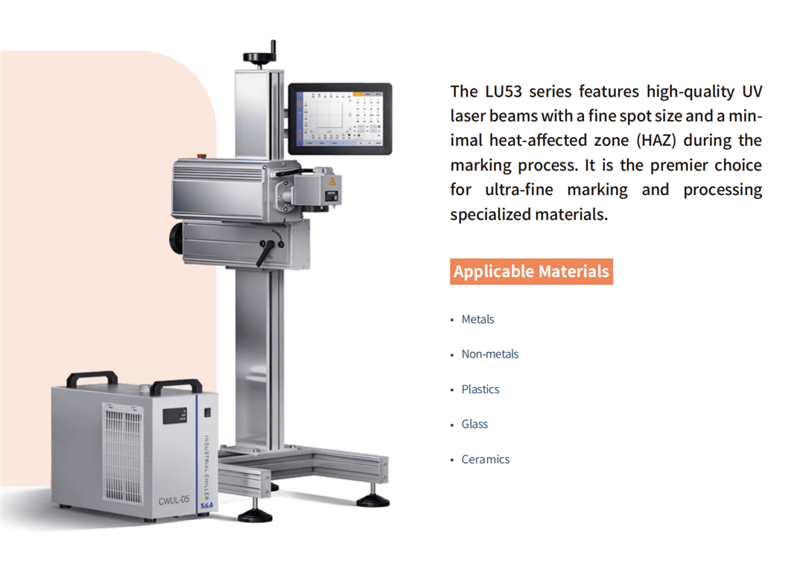
Recommended High-Precision UV Laser Marker for QR Codes: HPRT LU530 / LU531
Technical Specifications of HPRT LU530 / LU531
1. Laser & Performance
2. Control & Software
3. Marking Capability & Integration
4. Mechanical & Electrical
For businesses that need fine, high-contrast QR code and data matrix marking on demanding materials, the HPRT LU530 / LU531 UV Laser Marker is a strong choice. Its UV laser source features a fine spot size and minimal heat-affected zone, making it especially suitable for applications that require precision, clean edges, and stable readability.
Typical applications include:
- ◈ consumer electronics
- ◈ mobile phone parts
- ◈ glass products
- ◈ ceramic components
- ◈ precision parts with small code areas
Looking for the right QR code laser marking solution for your material and application? Contact us for expert advice. We offer sample testing to ensure high-contrast marking and reliable QR code readability across various materials.
Contact Our TeamFAQ about QR Code Laser Marking
1. What is the difference between QR code laser marking and laser engraving?
Laser marking changes the surface appearance with little or no material removal. Laser engraving removes material to create a recessed mark. Marking is better for smooth, high-contrast codes; engraving is better for parts that must resist abrasion or post-process wear.
2. Which laser machine is best for QR code marking?
It depends on the material. Fiber lasers (1064 nm) are best for most bare metals. UV lasers (355 nm) are ideal for sensitive plastics, PCBs, glass, and coated surfaces. CO2 lasers (10.6 µm) are commonly used for wood, leather, paper packaging, and some acrylic applications.
3. How small can a laser-marked QR code be?
With a high-precision UV laser, micro QR codes can be marked at around 1 mm × 1 mm in controlled applications. In production, the practical size depends on material response, code content, scanner resolution, and a proper quiet zone.
4. How do I achieve high QR code scannability?
Optimize power, speed, pulse frequency, hatch spacing, and focus for the specific material. In industrial DPM applications, use a barcode verifier instead of a smartphone and validate against ISO/IEC TR 29158 (AIM DPM) where required.
5. What matters more: deeper marking or higher contrast?
It depends on the use case. Higher contrast is more important for fast, reliable scanning. Deeper marking is more important when the code must survive abrasion, repainting, or harsh downstream processes.