

An AI weighing scale for supermarkets uses computer vision to automatically recognize produce, calculate prices, and print labels without manual PLU input.
It helps supermarkets and grocery stores reduce human error, improve efficiency, and speed up weighing operations, especially in high-volume fresh produce environments.
This guide explains how to choose the right smart weighing scale for supermarkets and retail stores, including key features and practical decision criteria, and highlights a proven solution such as the HPRT C-L9AI for modern supermarket operations.
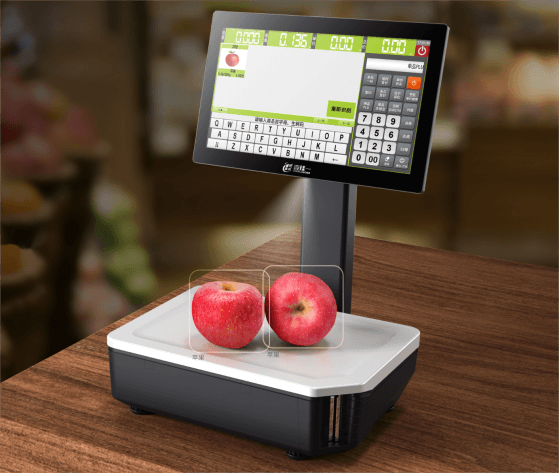
What Is an AI Weighing Scale for Supermarkets?
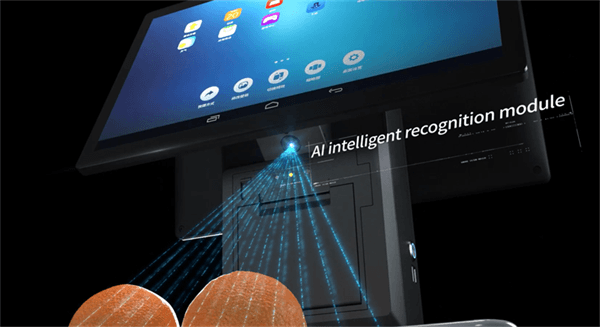
An AI weighing scale for supermarkets is an automated retail scale that identifies products, calculates weight-based pricing, and prints barcode labels using AI vision technology.
It is also known as:
- ● AI produce scale
- ● AI recognition scale
- ● smart retail scale
In practice, it functions as a fast and accurate weighing and labeling system for supermarket produce departments, grocery stores, and fresh food counters.
Why Supermarkets Are Replacing Traditional Label Scales
Traditional label scales rely on PLU lookup. The process has remained largely unchanged for decades. An employee weighs the item, searches for the product code, selects it manually, and prints the label.
Experienced staff can complete this quickly. New employees usually cannot.
Over time, retailers encounter common issues:
Retail and supermarket AI scales solve these problems by automating product recognition and simplifying workflows.
AI Weighing Scale vs Traditional Label Scale
| Feature | AI Weighing Scale | Traditional Label Scale |
|---|---|---|
| Product Recognition | Automatic AI recognition | Manual PLU entry |
| Weighing Speed | 3–5 seconds | 10+ seconds |
| Training Required | Minimal | High |
| Accuracy | High (AI-assisted) | Depends on staff |
| Customer Experience | Fast & smooth | Can be slow |
Key takeaway:
AI scales significantly reduce manual steps and improve efficiency in high-traffic supermarket environments.
Key Features to Look for in an AI Weighing Scale for Retail
Retailers evaluating commercial AI weighing scales tend to focus on a few practical details. These determine whether the scale actually improves store operations.
1. Recognition Accuracy
The first question is simple: Can the system reliably identify produce?
- ● Industry benchmark: 98–99% accuracy
- ● Influenced by: camera quality, AI training dataset, lighting conditions
High-quality AI systems now support recognition for most common fruits and vegetables. Some models like HPRT C-L9AI cover over 97% of fresh produce categories and can even identify items inside thin plastic bags.
AI models are typically trained on large datasets of produce images, and some systems support continuous updates to improve recognition accuracy over time.
2. Recognition Speed
Speed directly impacts throughput in busy supermarket environments.
- ● AI recognition: ~0.1 seconds
- ● Full weighing cycle: 3–5 seconds
Compared with traditional label scales (typically 10+ seconds per transaction), AI systems significantly reduce waiting time.
3. Display and User Interface
The screen is the primary interaction point for both staff and customers.
Larger displays improve visibility and make product selection easier when manual confirmation is required. Many modern systems now use 15-inch touchscreen displays with high resolution for better clarity.
Dual-screen configurations are also common, allowing the operator and the customer to view the weighing information simultaneously.
4. Label Printing Performance
Printing speed may seem like a minor detail, but it directly affects throughput.
Retailers should look for weighing scales capable of printing labels quickly and consistently, especially during peak shopping hours.
Industry-standard printing speeds typically range from 100 to 150 mm/s and support label rolls up to 120 mm in diameter, reducing downtime caused by frequent paper replacements during peak hours.
5. Connectivity and System Integration
AI retail scales rarely operate alone. They usually connect to store systems such as:
- ● POS platforms
- ● product databases
- ● inventory systems
Common connectivity options include:
- ● LAN
- ● USB
- ● serial interfaces
- ● Wi-Fi or Bluetooth
Reliable connectivity ensures product data can sync across multiple scales in the store.
6. Regulatory Certification and IP Rating
For retailers in North America and Europe, commercial scales must comply with metrology standards such as NTEP (U.S.), MID (EU), or OIML, ensuring legal accuracy for trade and regulatory inspections.
Retail environments also require durable equipment. An IP protection rating (such as IP54 or higher) helps protect the scale from moisture, dust, and routine cleaning in busy produce departments.
Checklist: How to Evaluate an AI Weighing Scale for Supermarkets
This quick checklist serves as a practical reference when comparing different models:
Best AI Label Scale for Supermarkets: HPRT C-L9AI
Among the new generation of AI retail scales, the HPRT C-L9AI is highly suitable for supermarkets and grocery stores handling large volumes of fresh produce, bulk snacks, deli items, bakery products, and other weight-based goods.
It combines AI product recognition, high-speed label printing, and a large touchscreen interface to support fast and efficient weighing operations.
Key Features
AI Produce Recognition
Automatically identifies fruits, vegetables, and bagged produce with recognition accuracy of up to 99%.
Fast Recognition Speed
The built-in AI camera completes product recognition in about 0.1 seconds, allowing a full weighing cycle in just 3–5 seconds.
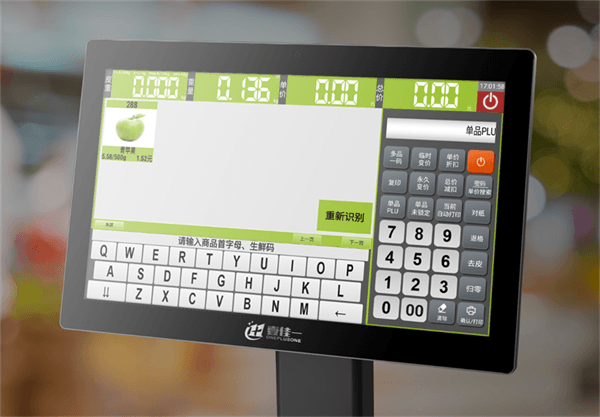
Large 15.6-inch Touchscreen
A 1920×1080 capacitive display provides clear product images and intuitive operation for both staff and customers.
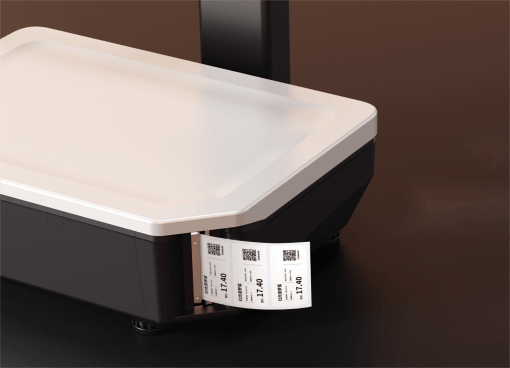
High-Speed Label Printing
Integrated printer supports speeds up to 125 mm/s, ensuring fast label output during peak store hours.
Flexible Connectivity
Supports LAN, USB, Wi-Fi, and Bluetooth, making it easy to integrate with POS systems and store networks.
Offline Operation
Product data can be stored locally, allowing the scale to continue operating even during temporary network interruptions.
Technical Specifications of HPRT C-L9AI
| Specification | Details |
|---|---|
| Maximum Capacity | Max = 3/6 kg; Max = 6/15 kg; Max = 15/30 kg |
| Minimum Capacity | Min = 20 g; Min = 40 g; Min = 100 g |
| Number of Division | e=d=1/2 g; e=d=2/5 g; e=d=5/10 g |
| Display | Main Display: 15.6-inch capacitive touchscreen, 1920 × 1080 resolution Optional Customer Display: 15.6-inch LED backlight display, 1920 × 1080 resolution |
| Label Paper Width | Max. 60 mm |
| Label Paper Outer Diameter | Max. 120 mm |
| Print Speed | Up to 125 mm/s |
| External Interfaces | 1 × Micro USB (Debug), 4 × USB 2.0, 1 × RJ12 Cash Drawer, 1 × RJ45 LAN (10/100M), 1 × RJ11 Serial Interface, 1 × Audio Microphone 2-in-1 Interface, 1 × Power Interface |
| Wireless Connectivity | Wi-Fi, Bluetooth |
| Optional Accessory | AI image recognition camera, 15.6″ non-touch customer display |
| Power Supply | Input: AC 100–240 V, Output: DC 24 V / 2.5 A |
| Dimensions (L × W × H) | 399.6 mm × 390.3 mm × 574.0 mm |
Notably, all HPRT commercial weighing scales meet OIML certification, enabling legal use worldwide and meeting the strict requirements of international markets.
All these features support a variety of common weighing tasks in supermarket environments.
Typical Applications
Fresh Produce Weighing Stations
Automatically recognizes fruits and vegetables and prints barcode labels within seconds.
Self-Service Weighing Areas
Enables customers to weigh and label produce independently, reducing staff assistance.
Deli, Bakery, and Fresh Food Counters
Supports fast product selection and label printing for meats and bakery items sold by weight.
After deploying HPRT AI scales in stores, retailers often notice a few immediate improvements:
✅ Staff training becomes easier. New employees no longer need to memorize large lists of PLU codes.
✅ Weighing operations become faster, especially during peak shopping periods.
✅ Customer experience improves because queues at weighing stations disappear.
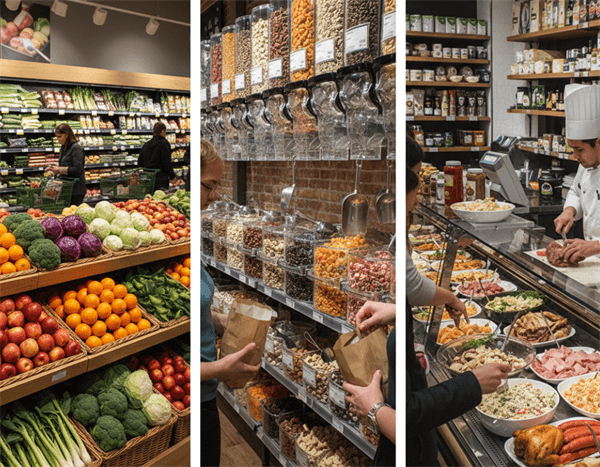
Store operations also become more consistent, since AI recognition reduces many of the small errors that occur during manual product selection.
For supermarkets dealing with high volumes of fresh produce and deli, those small improvements quickly add up.
HPRT: A Trusted Partner for Commercial AI Weighing Solutions
HPRT is a trusted manufacturer of commercial weighing solutions for supermarkets and retail stores worldwide. Our product portfolio includes price computing scales, label printing scales, and AI recognition scales designed for modern retail environments. These systems help stores improve weighing efficiency, reduce errors, and streamline daily fresh-produce operations.
With over two decades of manufacturing experience, HPRT supports global retailers, distributors, and system integrators with reliable hardware, scalable production, and flexible OEM/ODM services.
FAQ About AI Weighing Scales for Supermarkets and Retail Stores
Q1: What is an AI smart scale used for in supermarkets?
AI smart scales are used in supermarket produce departments to automatically recognize fruits and vegetables, calculate weight-based prices, and print barcode labels for checkout.
Q2: How accurate are AI produce recognition scales?
Most modern AI recognition scales achieve accuracy rates of around 98–99% for common fruits and vegetables, depending on lighting conditions and product presentation.
Q3: Do supermarkets still use traditional label scales?
Yes, many supermarkets still use traditional barcode label scales. However, retailers are increasingly adopting AI smart scales to reduce manual PLU entry, improve weighing speed, and simplify staff training.
Q4: What features should retailers consider when choosing an AI smart scale?
Retailers should consider recognition accuracy, recognition speed, display size, label printing speed, system connectivity, regulatory certification (NTEP/MID/OIML), and durability such as IP protection ratings.