

For decades in retail, weighing fresh produce meant forcing cashiers or customers to memorize hundreds of PLU (Price Look-Up) codes or manually search through endless touchscreen menus. Today, AI recognition scale has solved this bottleneck.
In this comprehensive guide, we explain how these AI recognition scales work, their operational ROI, and how to choose the right hardware and the top recommended models for you.
What Is an AI Recognition Scale?
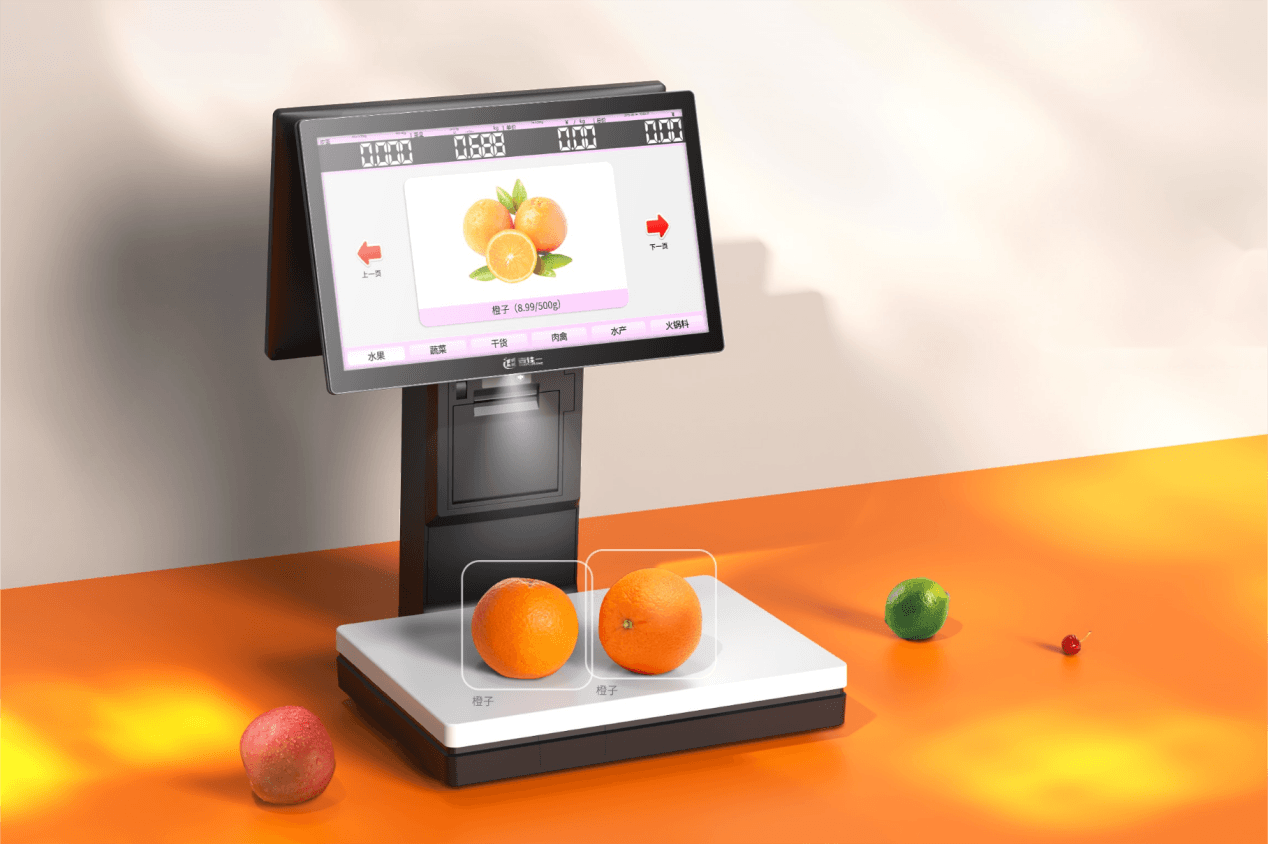
An AI recognition scale is an advanced retail weighing device equipped with a camera and artificial intelligence software that automatically identifies products placed on the scale.
Typical functions include:
- ● Automatic product recognition (fruits, vegetables, deli foods, snacks)
- ● Weight measurement
- ● Automatic price calculation
- ● Label or receipt printing
- ● POS integration and payment support
- ● Sales data upload to store management systems
Because these processes happen instantly, a supermarket AI scale significantly improve checkout efficiency and reduce manual errors.
Today, image recognition scales are commonly used in:
- • Supermarkets and hypermarkets
- • Fruit & vegetable stores
- • Farmers markets
- • Fresh food chains
- • Deli and prepared food counters
- • Snack stores
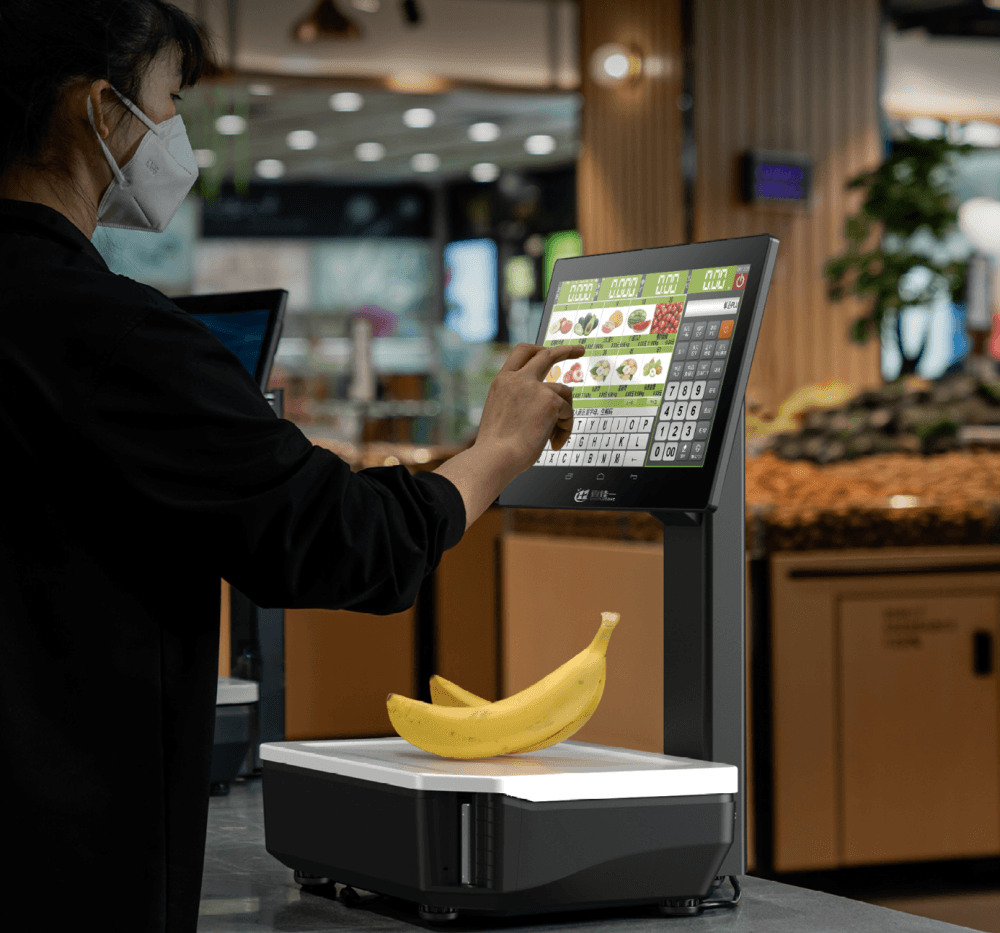
By combining product recognition, weighing, and price calculation in a single workflow, AI smart scales simplify daily operations in modern fresh retail environments.
How an AI Recognition Scale Works
Although the technology sounds complex, the actual workflow of an AI recognition scale is simple and fast.
Step 1 – Product Placement
A customer or store employee places the item onto the weighing tray.
Step 2 – AI Image Recognition
The built-in camera captures an image of the item. The AI model analyzes features such as: Color, Shape, Texture, Size. Using these features, the system identifies the product category — for example apples, oranges, or tomatoes.
Step 3 – Automatic Weighing & Pricing
While recognition is happening, the scale simultaneously measures the weight.
The system automatically retrieves the corresponding price from the product database and calculates the total cost.
Step 4 – Label, Receipt, or POS Checkout
Depending on the specific device, the scale will either print a barcode label for the customer to scan at the register, or—if it is an AI checkout scale—send the data directly to the POS software for immediate payment.
5 Key Advantages of AI Recognition Scales
Retailers adopt AI smart recognition scales primarily because they solve several real operational problems.
Faster Checkout and Shorter Queues
Manual PLU lookup can take 10 seconds or more per item. An AI produce scale recognizes products in about 0.1 seconds, dramatically reducing checkout time.
Lower Staff Training Requirements
Traditional weighing requires employees to memorize hundreds of product codes. With AI scales featuring object recognition, even new employees can operate the system immediately.
High Recognition Accuracy
Modern AI vision scale models achieve around 99% recognition accuracy, even for bagged produce or visually similar fruits.
Self-Learning Capability
Many AI weighing scale solutions include continuous learning models. When new products are added, the system improves its recognition accuracy over time.
Better Store Data Management
Smart scales can upload data to backend systems for sales analysis, inventory management, product traceability, and store performance monitoring. This turns a simple scale into a valuable retail data tool.
Common Types of AI Recognition Scales in Retail and Supermarkets
Different retail environments require different hardware. When sourcing new equipment, partnering directly with a reliable retail weighing scale manufacturer ensures you get enterprise-grade hardware durability, seamless POS API integration, and long-term technical support.
Here are the two primary categories of AI scales and our top industry recommendations directly from the HPRT manufacturing line.
1. AI Recognition Label Scales (for Fresh Departments)
This is the classic supermarket AI scale setup in the fresh area — produce, deli, meat, bakery, and bulk foods.
They are sometimes installed in self-service weighing areas, allowing customers to weigh and label items themselves. This helps reduce queues at weighing stations and ease pressure during busy hours.
Typical flow: weigh → AI recognizes → print label → pay at checkout
Highly Recommended AI Label Scale: HPRT C-L9AI
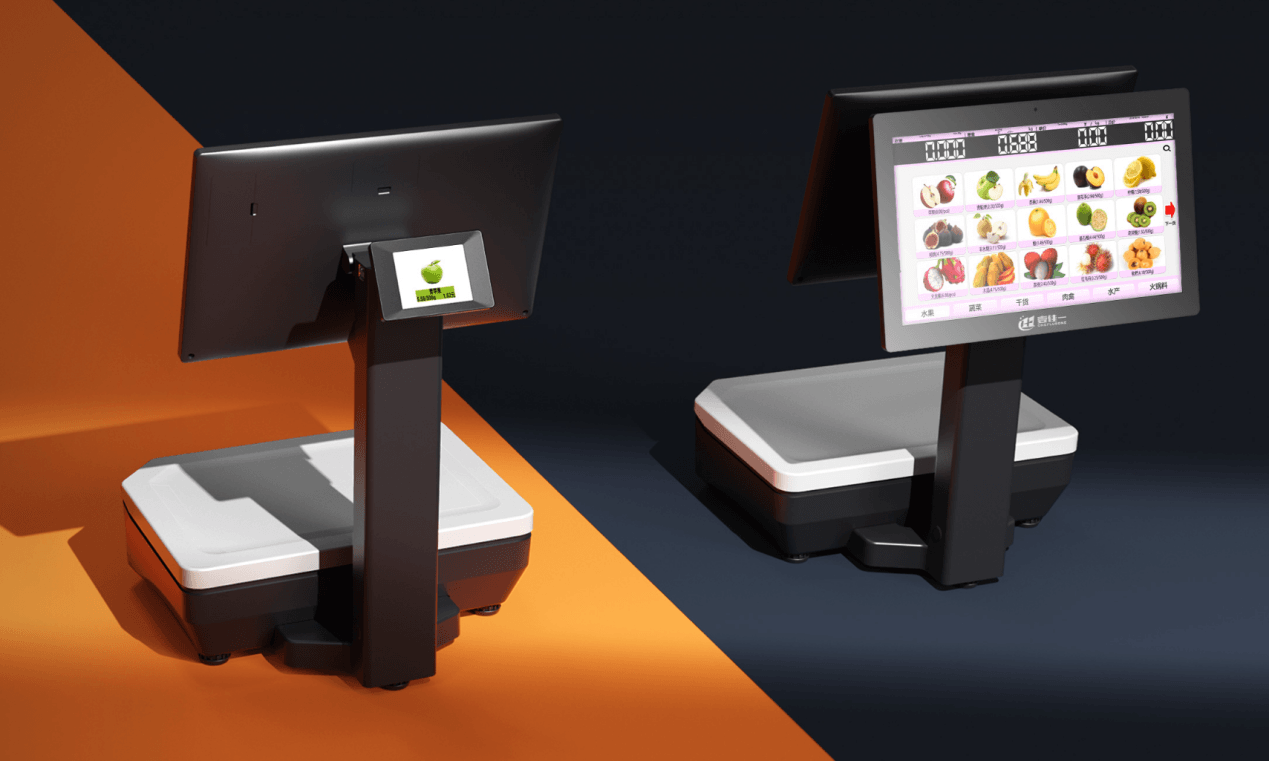
A typical example is the HPRT C-L9AI AI Recognition Label Scale, precise recognition and proven durability, perfect for fast weighing of fresh produce like fruits, vegetables, meat, and seafood.
1. Instant AI Recognition
Identifies produce in about 0.1 seconds, completing a full weigh-and-label cycle in 3–5 seconds to keep weighing stations moving during peak hours.
2. High Recognition Accuracy
Supports most common fruits, vegetables, and bagged items, with recognition accuracy designed to reach around 99% as the system learns in real store environments.
3. Large 15.6″ Touchscreen
Clear 1920×1080 interface allows both staff and customers to easily confirm product and pricing information.
4. Stable Even Offline
Local product data storage allows the scale to continue operating normally during temporary network interruptions.
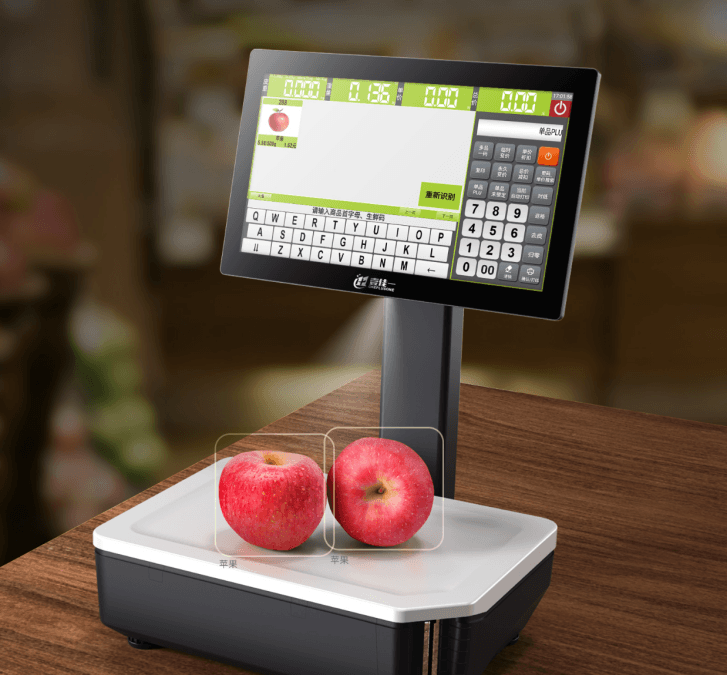
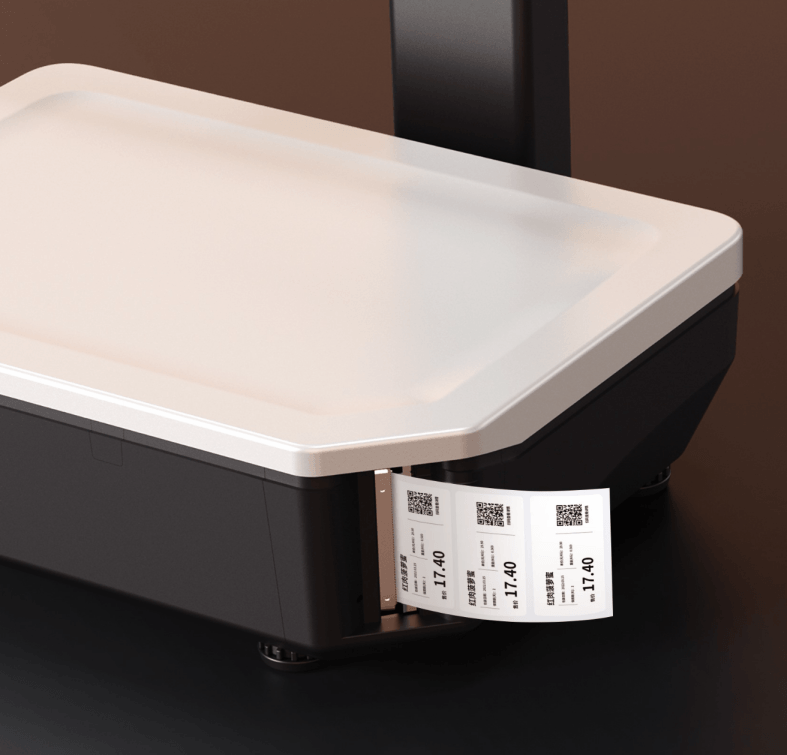
With intuitive operation and AI-assisted product recognition, store staff can quickly get started without memorizing long PLU lists, reducing training time while improving daily weighing efficiency.
2. AI Integrated Weighing POS Scale (for Checkout Lanes)
For stores wanting weighing and checkout in one device, AI checkout scales combine weighing, product identification, receipt printing, and payment processing into a single checkout terminal.
Typical uses include:
- ● cashier lanes that still weigh produce
- ● self-checkout kiosks
- ● smaller grocery stores where counter space is limited
In these situations, retailers often prefer an integrated POS weighing solution rather than separate devices.
Recommended AI Integrated Weighing POS Scale: HPRT C-P8AI
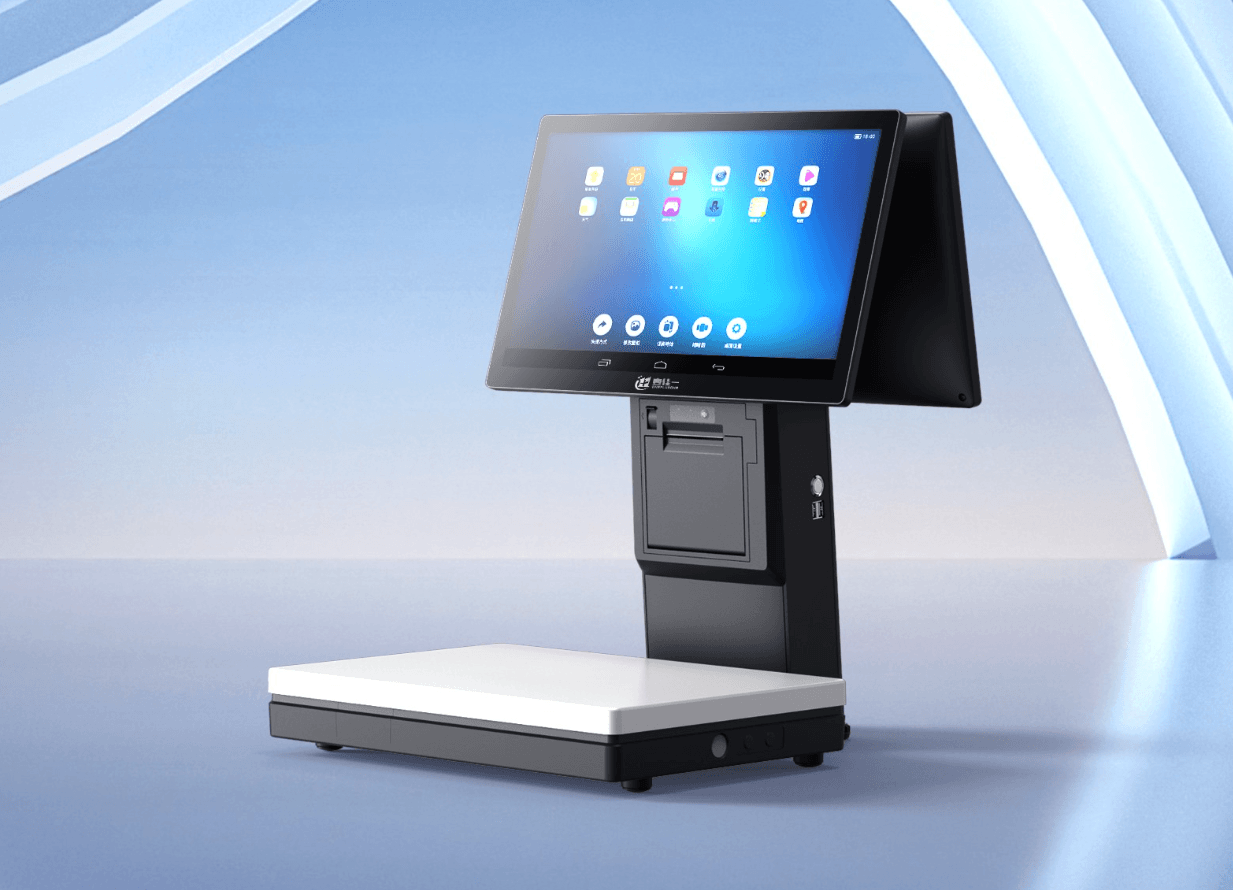
For stores that handle weighed items directly at checkout, the HPRT C-P8AI AI Weighing POS Scale brings weighing, product identification, and payment into a single device.
1. Unify Weighing and Checkout
Run weighing, product lookup, receipt printing, and payment from one terminal. This simplifies cashier workflows and eliminates the need for multiple devices on the counter.
2. Recognize Produce in Seconds
The built-in AI camera identifies fruits and vegetables in about 0.1 seconds.
3. Keep Checkout Counters Clean and Efficient
Replace separate scales and terminals with a compact all-in-one unit that saves space and keeps checkout areas organized.
4. Integrate Easily with Retail Systems
Connect to POS software, scanners, and peripherals through common retail interfaces, making deployment straightforward in existing store environments.
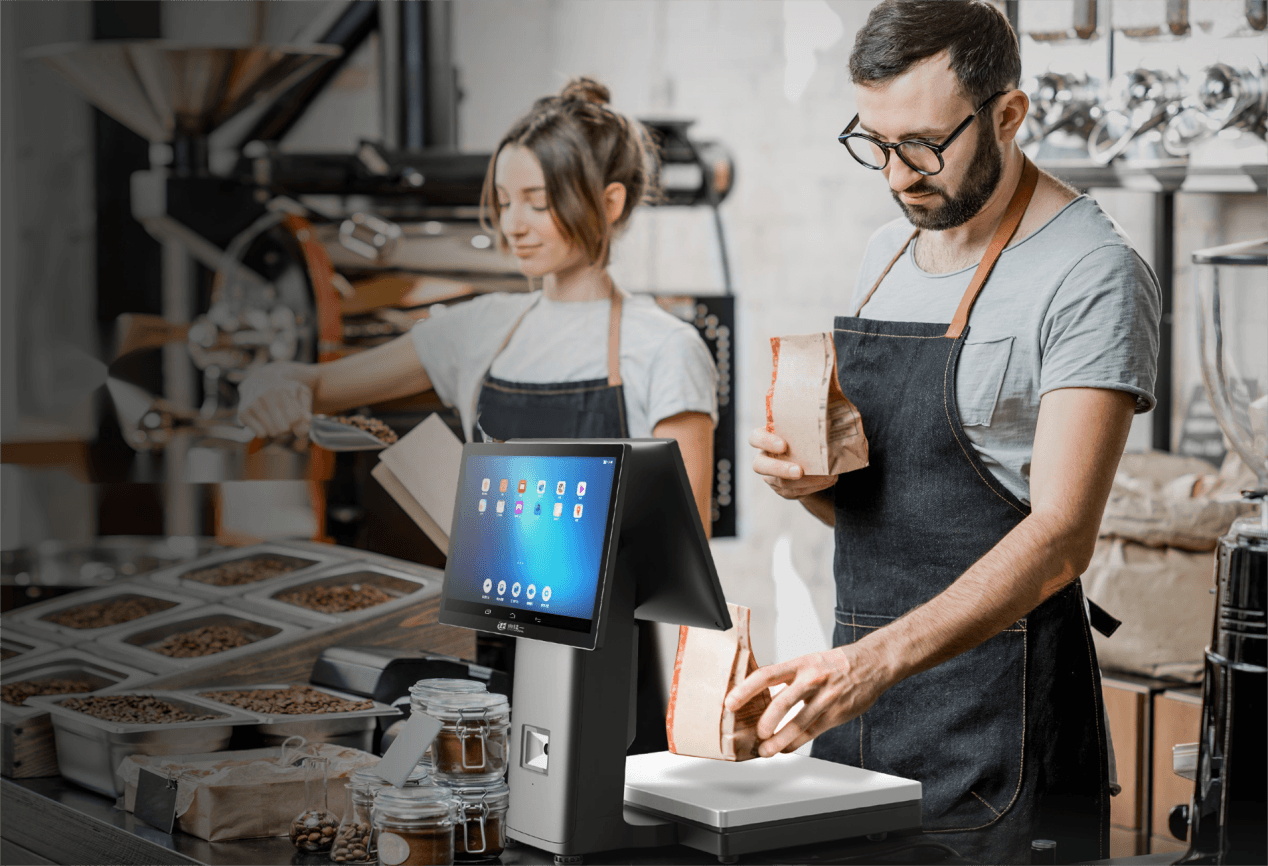
The C-P8AI works especially well in cashier lanes, self-checkout stations, convenience stores with fresh sections, bulk vending snack stores, and small grocery formats where space is limited and checkout speed matters.
Partner with a Professional AI Scale Manufacturer
Whether you are upgrading a single fresh food boutique or deploying smart scales across a national supermarket chain, sourcing directly from the factory guarantees the best ROI.
As a leading AI recognition scale manufacturer and retail technology provider, HPRT has helped supermarkets, fresh food boutiques, and self-service delis streamline their checkout processes. We not only provide robust hardware, highly accurate visual recognition algorithms, and flexible API integrations for your existing ERP systems, but also support bulk purchasing and OEM/ODM AI recognition customizations for retail system integrators.
Contact HPRT Experts Today to discuss your retail weighing needs and request a product demo.
Frequently Asked Questions
1. How accurate is the visual recognition of an AI recognition scale?
The initial recognition accuracy is exceptionally high—reaching up to 99%. More importantly, HPRT AI recognition scales feature a deep self-Learning mechanism. Every time a user confirms an item, the model optimizes itself. The more you use it, the smarter it gets, easily recognizing items even under complex store lighting or inside semi-transparent plastic bags.
2. What types of products can the AI recognition scale recognize?
The system is incredibly versatile. It comes pre-trained to recognize over 200 types of fresh produce and over 2,000 types of bulk snacks, dry goods, and seafood. If you introduce a new seasonal product, you can add it directly on the spot without needing cloud-based expert training.
3. Does the AI scale require a constant internet connection?
No. A major advantage of HPRT AI scales is their Local Data Storage. The AI recognition algorithms run directly on the machine's local processor. While an internet connection is used for initial activation and backend data syncing, the scale will continue to recognize products and print labels perfectly even if the store's Wi-Fi goes down.
4. How hard is it to add a new product to the AI system?
It is extremely simple and takes just seconds.
Step 1: Place the new product on the scale so the camera captures it.
Step 2: Search for the product using its name or code and confirm it.
The system instantly learns the visual profile. The next time that item is placed on the scale, it will be recognized automatically in under 0.1 seconds.
5. What are the hardware and OS requirements?
HPRT AI scales are designed with highly efficient, industrial-grade hardware. Depending on your POS requirements, models like the C-P8AI and C-L9AI support Android 8.1/12 (powered by reliable RK3288/RK3568 processors), while other configurations support Windows 7/10 (powered by Intel® J1900 Quad-core chips). This ensures seamless compatibility with almost any existing supermarket POS software. Training a new cashier to use the hardware takes less than 5 minutes.
6. How do I maintain and calibrate the AI scale?
Maintenance is minimal. Place the scale on a hard, level surface and perform a standard weight calibration 1 to 3 times a month, depending on usage frequency. For the AI component, simply wipe the camera lens regularly with a microfiber cloth to prevent dust buildup. The AI software and learning models will update automatically.
7. What happens if the AI fails to recognize an item?
Recognition failures are rare (accuracy is typically >99.5%) but can occasionally happen due to extreme lighting glare or background interference. If the AI is unsure, the cashier can quickly use HPRT's multiple backup search methods, such as searching by item name, image, unit price, or fresh code. Once the cashier manually selects the correct item, the AI learns from this correction to prevent future errors.